

Demand forecasting on your own order history: seasonality and slow movers

Huseyin Olmez
COO & Co-founder at Nodient
For better demand forecasting you rarely need external data or an expensive platform. The strongest source you already have: your own order history. It holds the seasonality, the weekly rhythm, and the behavior per customer and per article. The trick is to let that history predict, instead of only looking back at it.
Why your own history beats an average
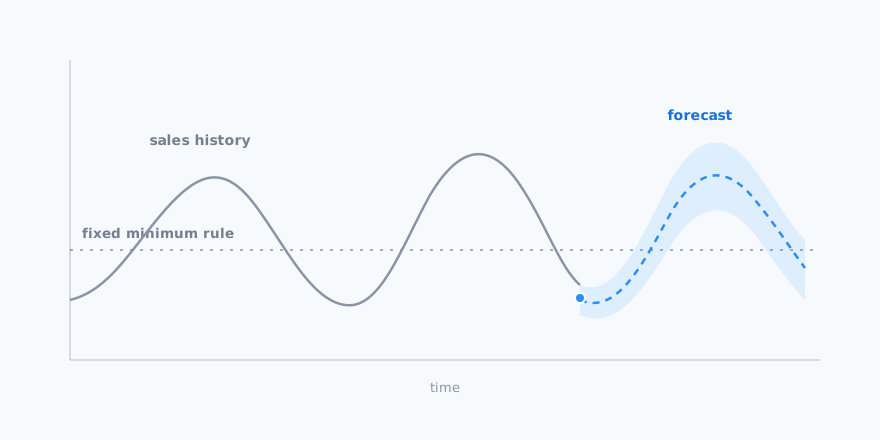
Most ERP systems drive purchasing on a fixed minimum and maximum. That's essentially an average from the past, and an average doesn't look ahead. It doesn't see a peak coming or an article slowly falling out of favor.
A forecasting model does something else. It learns the patterns in your own sales: which articles peak in which season, which customer orders around the same date each month, and which trend is slowly turning. Instead of one fixed line you get a per-article expectation that moves with what actually happens.
Season: catching the peak before it's there
In food and beverage, season is rarely a surprise, and yet it goes wrong every year. The order goes out too late, or too tight, and in the busiest weeks you're selling 'no'. That's because the fixed purchasing rules don't know the season.
A model that knows your history across several years sees the peak coming and proposes a larger order in time. The buyer decides, but no longer starts from scratch or from gut feeling.
Slow movers: what do you still buy, and what not?
The real gain often isn't in the fast movers, but in the tail. Articles that sell occasionally, or barely at all, quietly eat up space and shelf life. Fixed min/max rules keep replenishing them, even when demand has dried up.
A model distinguishes an article that runs slowly but steadily from one that's dying out. For the first you keep a small, targeted stock. For the second you stop rebuying before it becomes dead stock. So your waste drops without customers missing out on what does sell.
The buyer still decides
A forecast is a proposal, not an order. The model indicates per article what it expects and what it would buy; the buyer reviews and decides. Especially early on that matters, because trust grows by holding the forecast against reality.
You also don't need to perfect your data first. Usually the sales and stock data already in your ERP is enough. We determine the minimum to start upfront, and quality improves as it runs.
Your best forecasting source is your own order history. Use it to catch seasonality in time and to decide, per slow mover, what you still buy and what you don't. Less waste, fewer stock-outs, and a buyer who steers on numbers instead of gut feeling.
Frequently asked questions
How much history do you need for a good forecast?
For seasonal patterns, several years helps, but we often get value from the data that's there. We assess what's available upfront and determine the minimum to start meaningfully.
Does this work for articles that sell little?
That's exactly where much of the gain sits. The model distinguishes a steady slow mover from an article that's dying out, so you keep the first in stock deliberately and phase the second down in time.
Does the model replace our buyers?
No. The model proposes per article; the buyer reviews and decides. Your people's knowledge stays leading, with the numbers as a strong second.