

The EU AI Act for distribution and 3PL: what actually applies to you?

Chris Abear
CEO & Co-founder at Nodient
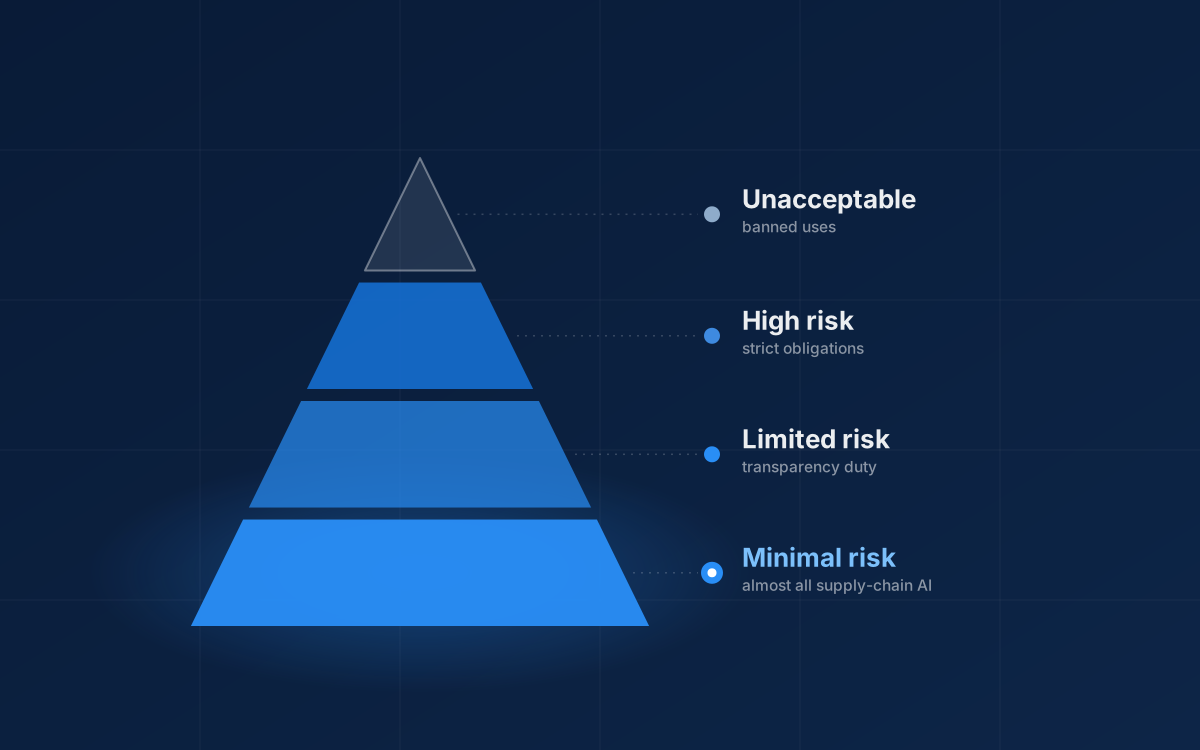
The European AI Regulation, the AI Act for short, is the world's first broad AI law and comes into force in stages over the coming years. The headlines are about banned systems and heavy fines, and that makes companies nervous. But whether that applies to you depends on how you use AI. For most distributors and 3PL parties the picture is calmer than the headline suggests. Note: this is a practical explanation, not legal advice. Have your own lawyer confirm the details for your situation.
The core: the law looks at risk, not at the technology
The AI Act sorts AI applications by risk. A small number are banned. A limited group counts as high-risk and gets heavy requirements. The large majority falls under low or minimal risk, mainly with transparency and due-care obligations.
So it's not about whether you use AI, but what for. The same technology can be high-risk in one context and barely regulated in another. That distinction determines your obligations.
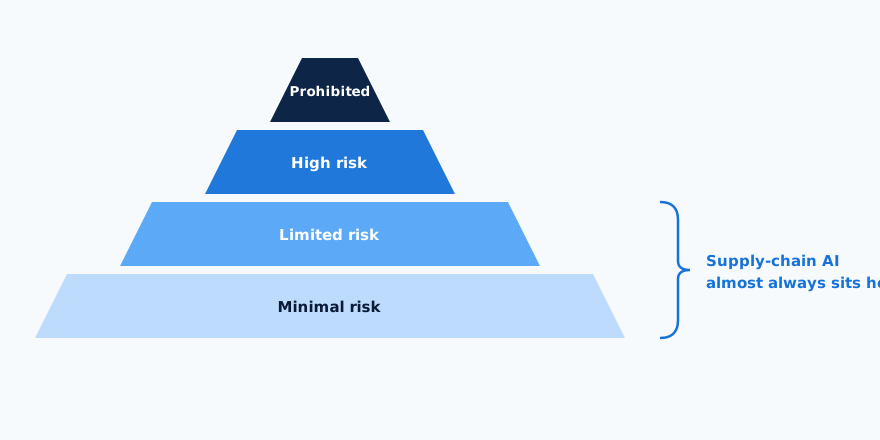
Where does a wholesaler or 3PL usually fall?
The AI you use in the chain, such as demand forecasting, order processing, and invoice checking, almost always falls in the lighter categories. These are tools that make proposals in operations, not systems that decide about people in the way the law flags as high-risk.
In those cases you're usually a user of AI, not its maker. That matters: the heaviest requirements sit with the providers of the systems, not the company that uses them. If you doubt a specific application, for example around hiring or credit assessment, that's exactly the case to have checked separately.
What you practically arrange now
Even in the lighter category there's homework, and it's mostly governance hygiene. Start with an overview: which AI do you use, for what, and from which supplier. That overview is the basis under every further step.
- Ensure AI literacy: the people working with the systems understand what it does, what the limits are, and when not to accept an outcome blindly.
- Be transparent where appropriate, for example when a customer talks to an AI chat instead of a person.
- Do supplier due diligence: ask your AI suppliers how they comply with the regulation, and record it.
- Keep the human in the loop for decisions that matter, exactly as you'd already do in order processing.
Why this fits well with smart automation
The nice thing is that these steps coincide with how you'd want to use AI anyway. A clear overview of your processes, a human reviewing the exceptions, and suppliers you can question: that's not an extra burden, it's simply mature operations.
With clients we start by mapping processes and where AI adds value regardless. That same overview is exactly what you need to comply with the regulation calmly.
For most distributors and 3PL parties the AI Act isn't a fire alarm, but a reason to put things in order. Map which AI you use and for what, make sure your people know what the systems do, and question your suppliers. Have the details for your situation confirmed by a lawyer, and treat compliance as part of mature automation, not a separate hurdle.
Frequently asked questions
Does our demand forecasting or order processing count as high-risk?
Almost never. These are operational aids that make proposals, with a human deciding. The high-risk category is about very different applications. Have it checked if in doubt, but don't panic.
We use AI from suppliers. Are we then responsible?
As a user you have lighter obligations than the provider of the system. What matters is that you know which AI you use, are transparent where appropriate, and question your suppliers about their compliance. Record it.
What's the first step we can take today?
Make an overview of all AI you use, for what, and from whom. That overview is the basis under AI literacy, transparency, and supplier due diligence, and it's immediately useful for your automation plans.
References
- European Parliament & Council of the European Union. (2024). Regulation (EU) 2024/1689 laying down harmonised rules on artificial intelligence (Artificial Intelligence Act). Official Journal of the European Union. https://eur-lex.europa.eu/eli/reg/2024/1689/oj
More articles
All articles→- StrategyWho benefits from a knowledge system, and why that answer is changing
- StrategyERP implementation without bringing operations to a standstill
- OperationsCRM automation for wholesalers without scattered spreadsheets
- Inventory & forecastingDemand forecasting on your own order history: seasonality and slow movers