

CRM automation for wholesalers without scattered spreadsheets

Jair Emanuels
CCO & Co-founder at Nodient
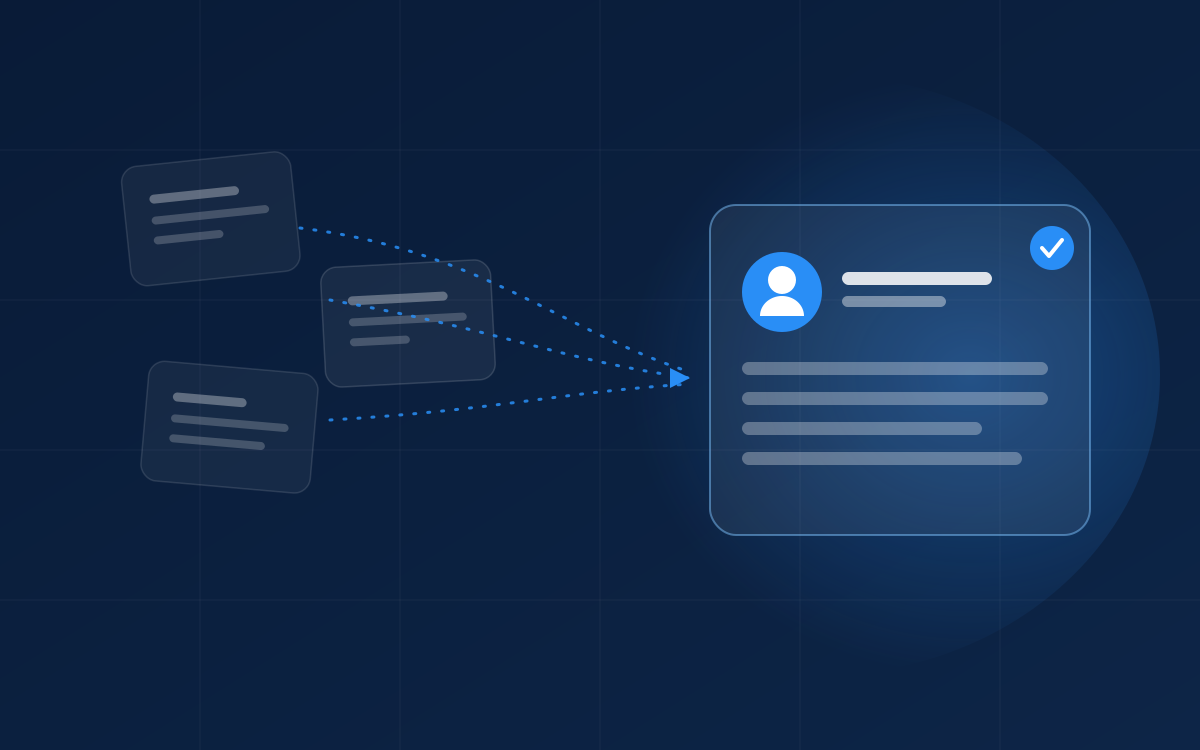
Ask three people at a wholesaler about the status of the same customer and you often get three answers. One looks in a spreadsheet, another in their inbox, the third in the ERP. Nowhere is the full picture in one place. As long as customer information is this scattered, every conversation and every follow-up costs needless time, and knowledge disappears the moment someone leaves. CRM automation solves that, as long as you start by bringing your data together and not with yet another software package.
Why customer data fragments at wholesalers
At many wholesalers the customer picture has drifted apart over the years. Every salesperson keeps their own list, agreements sit in inboxes, quotes in a shared folder and orders in the ERP. Each piece is correct on its own, but they don't hang together.
You only notice the consequence when something goes wrong. A customer calls and no one sees at a glance what's going on. A salesperson leaves and takes their knowledge with them. An opportunity slips because no one knew the previous quote was never followed up. Not because your people are careless, but because the information comes together nowhere.
From scattered sources to one customer view
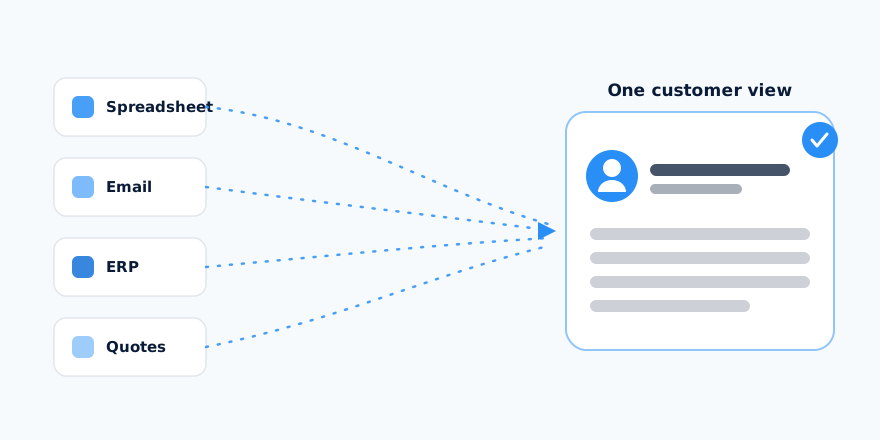
So the first step isn't buying a new system, but creating one customer view. You bring the data from spreadsheets, email, quotes and the ERP together into one record per customer, where orders, contact moments and open actions sit together.
The difference with a manually kept list is that it keeps itself current. A new order, a sent quote or an incoming email automatically lands on the right customer. That way no one has to retype anything, and the picture is actually correct at the moment you need it.
Automation your sales team actually uses
A CRM stands or falls on use. The main reason CRM projects fail isn't the technology, but that the team doesn't use the system. Research by Validity shows that low adoption is the biggest cause of failure, well above any technical problem [1].
The solution is to automate the boring side. If the CRM logs the order itself, reminds you of a follow-up and tracks the status of a quote, it saves your salespeople time instead of adding work. Then people use it because it helps, not because they have to.
Data quality that keeps itself in shape
A customer view is only valuable if you can trust it. Research by Validity shows that most CRM users consider less than half of their customer data accurate and complete [1]. Poor data quality is also expensive, and Gartner has pointed out for years that organizations structurally lose revenue and time to it [2]. In a CRM you see it in duplicate customers, outdated contacts and fields no one maintains anymore.
Here too automation helps. Duplicate records are detected and merged, missing data filled in, and changes carried through without manual work. You don't need to make your data perfect first, because you start with what's there and quality grows along with it. The commercial judgment, when you call a customer and with which offer, stays human work.
Start with your data, not with a package. Bring your customer information together into one view that keeps itself current, and automate the administrative work so your sales team actually uses it. That way you no longer lose knowledge when someone leaves, no follow-up slips, and you steer on a customer view you can build on.
Frequently asked questions
Do we need an expensive CRM package for this?
Not necessarily. It's often more valuable to connect your existing sources, like your ERP and inboxes, into one customer view than to add yet another standalone system. The connection matters more than the brand.
Our salespeople always drop off with a CRM. How do you prevent that?
By automating the administrative side. If the system logs orders, guards follow-ups and tracks quotes itself, it costs no extra work but saves time. Adoption follows naturally once using it pays off.
What happens to our existing customer data?
It forms the starting point. We merge duplicate records, fill in missing data and bring everything together. You don't need to clean up first, because quality improves while it runs.
References
- [1] Validity. (2025). The state of CRM data management in 2025. Validity Inc. https://www.validity.com/resource-center/the-state-of-crm-data-management-in-2025/
- [2] Gartner. (2024). Data quality. Why it matters and how to achieve it. Gartner. https://www.gartner.com/en/data-analytics/topics/data-quality
More articles
All articles→- StrategyWho benefits from a knowledge system, and why that answer is changing
- StrategyERP implementation without bringing operations to a standstill
- Inventory & forecastingDemand forecasting on your own order history: seasonality and slow movers
- StrategyThe EU AI Act for distribution and 3PL: what actually applies to you?