

ERP implementation without bringing operations to a standstill

Chris Abear
CEO & Co-founder at Nodient
For many wholesalers a new ERP system feels like a necessary evil. The current system pinches, but the switch sounds like a long project, high costs and the risk that daily operations grind to a halt. That fear is justified, because that's exactly how many projects go. Yet it doesn't have to be this way. With a phased approach your operation simply keeps running while you switch over, and you prove the value step by step instead of in one big leap.
Why ERP projects so often overrun
Large IT projects have a poor reputation, and not without reason. The Standish Group, which has tracked IT project outcomes for decades, keeps reaching the same result, namely that only a minority are delivered on time and on budget and that the large projects are the ones that fail most often [1]. An ERP implementation is exactly that kind of large project.
The cause rarely lies in the technology alone. It goes wrong when a company wants to replace everything at once, the scope keeps growing along the way, and the operation has to wait in the meantime. The longer such a big bang lasts, the greater the chance it gets out of hand. Turn it around and start small, and you take that risk away.
Start small and run in parallel
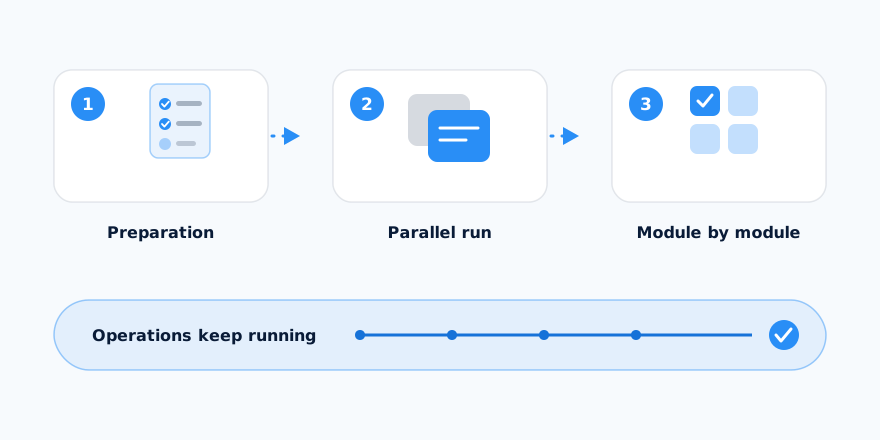
The core of a manageable implementation is that you don't switch everything over in one weekend. You work in phases. First a short preparation in which you map the most important processes and data. Then you let the old and the new system run alongside each other for a while, so you can compare and adjust without anything falling over. Only once a part has proven it works do you take it live, module by module.
That way the operation never stops. Orders keep coming in, invoices keep going out, and your people get used to the new system step by step instead of all at once. On paper it takes a little longer, but it's far safer, and you already see results along the way.
Your data does not need to be perfect first
A common reason to postpone an ERP project is that the data isn't in order yet. In practice you rarely need to spend a year cleaning up first. We assess the state of your data upfront and determine the minimum needed to start. The rest improves as it runs.
That matters, because data and technology are among the biggest causes of overruns. Research by Panorama Consulting into ERP projects names underestimated staffing, an expanding scope, and data and technical issues as recurring reasons budgets crack [2]. By starting small with the data you already have, you bring exactly those risks down.
Choose on your processes, not on the brochure
The biggest pitfall when choosing an ERP is letting yourself be led by the vendor's feature list. Every package can do everything, on paper. What counts is whether it supports your processes, the way your orders, stock and invoicing actually run.
That's why we don't start with the system, but with your operation. We map where time and errors leak away, and choose on that basis. At Dorstlust a free AI scan grew into a roadmap that reached more than 18 automated processes. The system is a means there, not a goal, and the decision stays with your people, with the numbers as backing.
An ERP implementation doesn't have to be a leap in the dark. Work in phases, let old and new run in parallel for a while, and take it live module by module once it's proven. That way your operation keeps running, you keep costs in hand, and you choose a system that fits how you actually work.
Frequently asked questions
How long does an ERP implementation take for a wholesaler?
It depends on your size and the number of processes, but with a phased approach you deliver working parts early instead of waiting months for one big go-live. You expand as soon as each part has proven it works.
Do we really have to migrate everything at once?
No, and it's actually best avoided. By going live module by module and letting the old system run along for a while, the operation keeps running and you sharply limit the risk.
What if our data isn't in order yet?
Then you start with the data that's there. We determine the minimum to start meaningfully upfront and improve quality while the system runs, instead of cleaning up for a year first.
References
- [1] The Standish Group. (2020). CHAOS report 2020. The Standish Group International. https://www.standishgroup.com/
- [2] Panorama Consulting Group. (2025). The 2025 ERP report. Panorama Consulting Group. https://www.panorama-consulting.com/resource-center/erp-report/
More articles
All articles→- StrategyWho benefits from a knowledge system, and why that answer is changing
- OperationsCRM automation for wholesalers without scattered spreadsheets
- Inventory & forecastingDemand forecasting on your own order history: seasonality and slow movers
- StrategyThe EU AI Act for distribution and 3PL: what actually applies to you?